Sunday, September 6, 2015

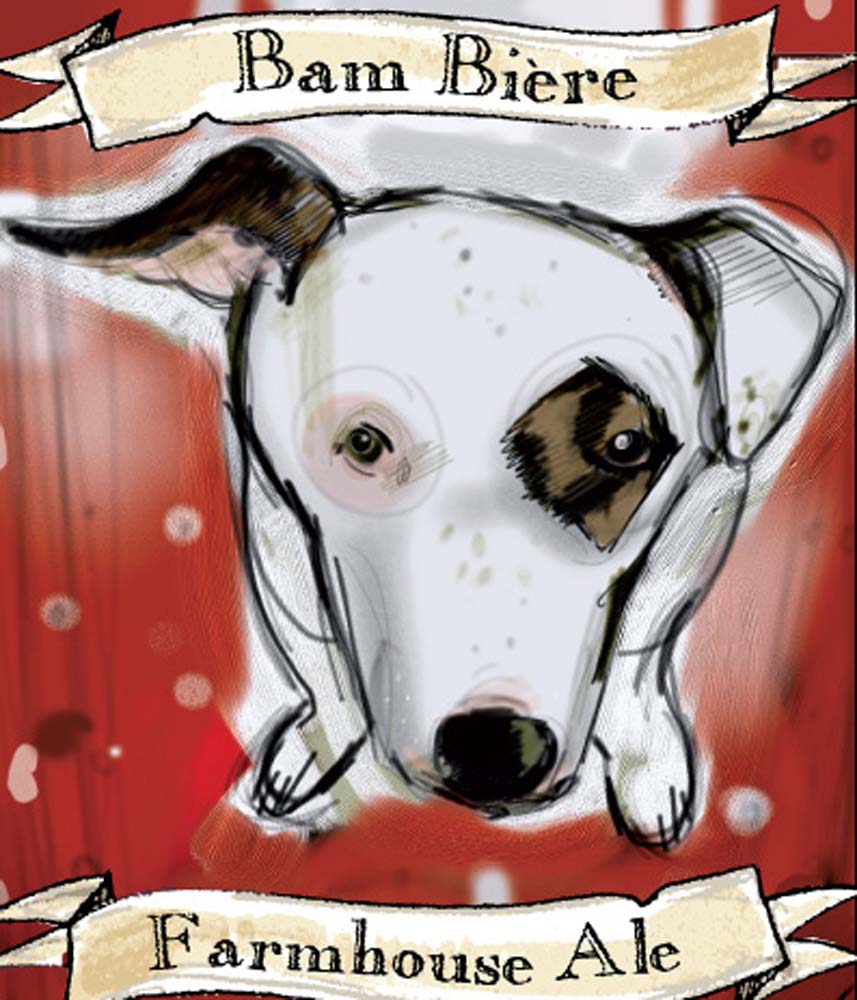
Bam Biere Clone

Today I try my hand at a style I've been thinking about brewing for several months - a Belgian sour ale. Whenever we're in Ann Arbor I try to make a point of stopping at Jolly Pumpkin to taste as much sour ale as possible. I'm especially a fan of their Bam Biere, a light Belgian sour ale with a full body, thick white foam, and enough sourness to keep you thinking about that next sip.

On a recent trip to Michigan my wife brought back a bottle of Bam Biere with a healthy dose of live cultures living at the bottom. After waiting a few agonizing months I finally found some time to brew with the dregs. That also meant we finally got to drink it! It was a good day. So here's my first attempt at a Bam Biere-like sour.

Recipe Notes
Style: Belgian Sour
Batch Volume: 5 gal.
Color: 6 SRM
Target Bitterness: 23 IBU
Target OG: 1.039

Grist
4 lb. Pilsner
2 lb. Pale Malt
1 lb. White Wheat
9 oz. Flaked Barley
4 oz. Crystal 80

0.8 oz. Crystal (60 min.)
0.8 oz. Crystal (30 min.)
1 tsp. Irish Most (15 min.)
0.5 oz. Crystal (0 min.)

WLP 550 Belgian Ale Yeast
Bam Biere Dregs

Brew Notes
Brew Date: 9/6/15
Mash Temp: 153F
Mash Time: 60 min.
Boil Time: 60 min.
Fermenter Volume: 4.5 gal
Measured OG: 1.048

Raised mash water to 156F. After dough in temp dropped to 153F and held steady there for the hour long mash. Pretty uneventful brew day; everything went great. Could only chill the wort to 80F because our ground water was pretty warm so I put the wort in my keezer overnight to chill. Temp was 60F in the morning. Pitched the vial of WLP 550 and the bottom inch or so of a Bam Biere we drank last night. Dregs were saved in the refrigerator.

After one day of fermentation my air lock blew off because, of course, I was brewing with wheat. EVERY brew I do with 1 lb or more of wheat has air lock problems. I could have fermented in my larger bucket but I didn't want to contaminate it with the Bam Biere bugs. I'm sure the beer will be fine but was very inconvenient nonetheless.

9/13/15 - Took a sample after one week and it smelled and tasted like nasty cheese. I wasn't too deterred though, assuming this was just one of several phases a sour ale transitions through on its way to being tasty. Gravity is 1.006.

One week before racking I re-swelled my oak barrel by filling with tap water and then slowly refilling as the water leaked out. After a few hours in the kitchen sink it was holding water pretty well. Topped it off and left it in the basement utility sink for a week to be sure it would hold. Performed like a champ.

9/25/15 - Before racking I drained and refilled the barrel with 180F water and left for 1 hour to kill a lot of the acetobacter that had collected in the unused barrel. The water I drained smelled and tasted a bit like vinegar and I didn't want much of that in the final beer. Drained the water and immediately racked the beer. In hind sight I probably should have let the barrel cool before racking but it'll probably be fine.

There was still some head space in the barrel so I decided to fill with water instead of letting oxygen hang out in the barrel and feed any acetobacter. Had to add over a gallon of water to fill the barrel, diluting to an effective OG of about 1.038. A little lower than I'd like but we'll do better next time. Sample smelled and tasted great. Just like Bam Biere. Excited to see how it ages.

Friday, May 15, 2015

Maris Otter & Columbus SMaSH

Third entry in my 'Getting Smashed' series is a Maris Otter and Columbus SMaSH. My buddy-in-brewing Mike Helle was kind enough to donate 8 lbs. of his Maris Otter stash for this science experiment. It smells and tastes great. I can see what all the hype around English malt is about.

The Vienna SMaSH I brewed last month acquired a diacetyl problem that I'm conflicted about trying to fix. (At least I think it's diacetyl.) I want to clearly identify that Vienna flavor but I kind of like the smoothness the diacetyl adds to the otherwise simple beer.

Having three of the same beer on tap is a little booooring though. I make take a pause for the flavor cause and do something else before finishing out the malt experiment. Julie returned from her Michigan trip with a bottle of Bam Biere from Jolly Pumpkin. I may have nefarious plans for this guy in the souring arena.

Recipe Notes
Style: Pale Ale
Batch Volume: 5 gal.
Color: 4 SRM
Target Bitterness: 36 IBU
Target OG: 1.040

Grist
8 lb. Maris Otter

0.5 oz. Columbus 15.6% (FWH)
1 tsp. Irish Most (15 min.)
0.5 oz. Columbus 15.6% (5 min.)
1.0 oz. Columbus 15.6% (30 min Hop Stand)
1.0 oz. Columbus 15.6% (Dry Hop 5 days)

Direct pitch of 2nd generation US-05 slurry

Brew Notes
Brew Date: 5/15/15
Mash Temp: 154F
Mash Time: 75 min.
Boil Time: 60 min.
Fermenter Volume: 5.25 gal
Measured OG: 1.042
Brewhouse Efficiency: 76%

Beautiful day for a brew today. Temps under 80 all day! Brew went off without a hitch. Another hop stand for 30 minutes to get the most out of Columbus for flavoring. Chilled down to 80 with the immersion chiller then in a cold water bath until it hit 72F and I got impatient. Gravity reading on 4.5 gallons of wort was 1.050 so I diluted with 3/4 gallon of water to hit 1.042 OG. I forgot to make a yeast starter last night from the 2nd gen US-05 slurry I had sitting in the fridge. It's been less than a month since harvest though so I warmed it to room temp, dumped the beer off the top, mixed it with some fresh wort in the mason jar, and dumped her on in.

I'm becoming a big fan of yeast rinsing since I have had a few successes with it. It's pretty economical and the attenuation have been consistently high. I may be over pitching which could cause some long term viability problems but don't know of a good way to get even a ballpark cell count measurement.

5/16/15 - After 24 hours gravity is 1.031, temp is 74F. Cooler would be nicer but US-05 is forgiving.

5/17/15 - Gravity is 1.012 but temp has risen to 76F. Too late to cool now I think. Whatever damage can be done has been done.

5/18/15 - Gravity is 1.008 and temp has fallen back to 72F.

5/22/15 - Gravity is 1.006 and temp is back to a normal 65F. Will probably let this sit in the fermenter for two weeks total to avoid the diacetyl problem I had with the Vienna SMaSH.

5/25/15 - Racked to secondary and dry hopped. FG is 1.006. It smelled a little bit like vinegar when racking but I think that was just the wort that wasn't cleaned up on the outside of the fermenter. The sample does taste a little like plastic with a bit of a cider character though. I'm guessing that was from the high fermentation temperature. I hope it doesn't get in the way of what the Maris Otter provides.

Kegging Notes
Measured FG: 1.006
Attenuation: 86%
ABV: 4.7%
Calories: 136 per 12oz.
Carbonation: 2.5 volumes (After force carbonating)

6/2/15 - Kegged after eight days of dry hopping. Longer than planned but I had a stout to evict from the keg which took some time. None of the off aromas or flavors were present which is awesome. There was a slightly stronger hop aroma and flavor than in previous SMaSHes likely because of the extra 3 days of dry hop contact time. I think it's the best tasting SMaSH so far but maybe because of the extra hoppiness.

Sunday, April 26, 2015

Two Row & Columbus SMaSH

Mmm, yeasty.
The second entry in my 'Getting Smashed' series is a Two Row and Columbus SMaSH. I'm pretty familiar already with what two-row can/can't do for lightness, flavor, and malt presence, but I decided to brew this one just to have a 'control' beer against which we can judge the others. Not the most exciting recipe in the world but dammit, we're collecting data for science! Well, I do get to make a yeast starter from the left over US-05 from last batch. So that's cool.

Recipe Notes
Style: Pale Ale
Batch Volume: 5 gal.
Color: 3 SRM
Target Bitterness: 38 IBU
Target OG: 1.040

Grist
8 lb. Two Row

0.5 oz. Columbus 15.6% (FWH)
1 tsp. Irish Most (15 min.)
0.5 oz. Columbus 15.6% (5 min.)
1.0 oz. Columbus 15.6% (30 min Hop Stand)
1.0 oz. Columbus 15.6% (Dry Hop 5 days)

1L Yeast starter of 2nd generation US-05 slurry

Brew Notes
Brew Date: 4/26/15
Mash Temp: 151F
Mash Time: 60 min.
Boil Time: 60 min.
Fermenter Volume: 5.25 gal
Measured OG: 1.042
Brewhouse Efficiency: 76%

Made a 1L yeast starter the night before. Started by measuring 100g Pilsnen DME into 800ml of water. Boiled for 10 minutes which is tough in an Erlenmeyer flask. Added 200ml of yeast slurry to reach the final 1L volume. Tried using stir plate but it's a weak piece of crap and the stir bar would stop moving after I left it for five minutes. Periodically agitated and aerated the starter.

After boil chilled to 170 for a 30 minute hop stand. Spent most of the hop stand at 165. Next time stop chilling at 175 to hit 170. Added hop stand hops immediately after flame out. They steeped during the two minute chill from boiling to 170. Chilled wort to 70F and poured through grain bag to collect hop material. Collected 4.5 gallons of 1.049 wort at 68F. Added 3/4 gal. of tap water to hit 5.25 gal. of 1.042 wort. Decanted beer from top of yeast starter and pitched yeast. Added gravity sample to flask, swished it around and pitch the remainder of the flask. Aerated by shaking 100 times.

Five hour brew day exactly with 30 minute hop stand.

Update 4/29/15 - Gravity reading is 1.007 already. Attributing to use of harvested yeast and yeast starter. Mashed two degrees lower but I've never really seen that have an effect before. Tastes smooth and buttery. I don't know exactly what diacetyl tastes like but maybe this is it. Probably let this go a week in primary instead of five days like the first SMaSH just to be sure this is cleaned up.

Update 5/2/15 - Racked to secondary. Gravity is 1.006. Decided to keep the yeast train going and with another yeast harvest. This time added a gallon of water to the fermenter before swirling around. Let the fermenter sit for ten minutes and poured 3/4 gal off the top into a one gallon jug. By adding more water I'm seeing much better stratification between beer, yeast, and trub. The image to the right is after letting the jug sit for 20 minutes. I'll wait 30 minutes total and decant into two pint size mason jars. This will be the 3rd generation of this US-05 yeast.

Update 5/5/15 - Dry hopped with 1 oz. of Columbus

Update 5/7/15 - Sample is very hoppy. A little bit of the 'dank' kind of hoppy I'm looking for. Gravity remains at 1.006.

Kegging Notes
Measured FG: 1.006
Attenuation: 86% (That seems high...)
ABV: 4.7%
Calories: 136 per 12oz.
Carbonation: 2.5 volumes (After force carbonating)

Update 5/11/15 - Kegged today. Doing the trick where I set it at 30 psi for 48 hours. Drinks clean but has a very noticeable 'back of the throat' bitterness that tastes like I swallowed lupulin powder.

Sunday, April 19, 2015

Vienna & Columbus SMaSH

It's all about malt
This brew marks the beginning of a malt experiment that I'm calling my 'Getting Smashed' series. I intend to make the same SMaSH beer seven times with seven different base malts to hopefully acquire a taste for what each base malt brings to the game. The seven malts I have lined up are...
  • Pale (2-row)
  • Pale Ale
  • Pilsner
  • Maris Otter
  • Golden Promise
  • Vienna
  • Light Munich
Today I'll be starting with Vienna malt. I chose to use Columbus hops for this experiment for a couple of reasons. First because I'm not that familiar with them but am excited to learn about their 'dank' contribution. Second, they're a very efficient bittering hop at 15.6% alpha so it keeps the cost down and minimizes the amount of plant matter in a 60 minute boil.

Recipe Notes
Style: Pale Ale
Batch Volume: 5 gal.
Color: 6.2 SRM
Target Bitterness: 38 IBU
Target OG: 1.040

Grist
8 lb. Vienna Malt

0.5 oz. Columbus 15.6% (FWH)
1 tsp. Irish Most (15 min.)
0.5 oz. Columbus 15.6% (5 min.)
1.0 oz. Columbus 15.6% (30 min Hop Stand)
1.0 oz. Columbus 15.6% (Dry Hop 5 days)

Safale US-05

Brew Notes
Brew Date: 4/19/15
Mash Temp: 153F
Mash Time: 75 min.
Boil Time: 60 min.
Fermenter Volume: 5.2 gal
Measured OG: 1.042
Brewhouse Efficiency: 75%

Brewed outside today because it was one of those rare spring-summer days in DC that are warm and sunny but not boiling lava hot. Everything went swimmingly. After the boil reduced wort temp to 170 for a 30 minute hop stand at sub-isomerization temps. Cooled and collected 4.5 gal. of 1.048 wort. Diluted to 5.2 gal. of 1.042 but the gravity's still slightly higher than I was aiming for. Efficiency for this batch is 5 points higher than normal. Julie brewed last weekend and experienced the same thing but had >80% efficiency. Something magic in the spring air?

Update 4/24/15 - Measured SG of 1.009. Fermented only five days and already moving to secondary. Despite this being a malt experiment I added 1.0 oz of Columbus in a hop bag for some sweet aromas. Washed the yeast and saved two pint jars of slurry.

Collected slurry
20 min. settling time. No visible yeast-trub separation.
Before refridgeration
After 1 day of refrigeration
Update 4/29/15 - Sample tastes a little like melon and butter. Can't decide whether to keg this now or let it go another couple of days on dry hops. EDIT: Kegged today in a partial experiment to see what kegging a beer this young is like. After cruising some brewing forums it doesn't seem too extreme, especially with the 5 day dry hopping in secondary. Pressurized to 30 psi in my first attempt at speed carbonating. Too many experiments at one time? Probably. But there's so much I want to try out. Will let sit for 48 hours then reduce to serving pressure and see how that speeds things up.

Kegging Notes
Measured FG: 1.008
Attenuation: 81%
ABV: 4.5%
Calories: 137 per 12oz.
Carbonation: 2.5 volumes (After force carbonating)

Update 4/30/15 - Yesterday when force carbonating I set the pressure at 30 psi for that keg then disconnected it and set the rest of the manifold back to serving pressure. This was probably a bad idea because when I pulled a sample today it was not coming out 'vigorously' at all. When I hooked it back up at 30psi there was definite audible pressure equalizing. So now I'm keeping 30 psi on this keg for 48 hours and disconnecting the others. That's probably the right way to do it.

Update 5/16/15 - This brew acquired a bit of a diacetyl problem that went undetected while kegging. I'd never smelled or tasted diacetyl before but based on the descriptions I read this batch definitely has it. As an experiment in diacetyl reduction I pulled the keg out of the keezer and let it warm up to 70F. Then I top cropped my Maris Otter SMaSH during high krausen and pitched it into the keg. Stirred it around with my sanitized brew spoon. Excited to see if the krausening thing can help w/the diacetyl.

5/17/15 - Keg is at 78F. Sample has a lower diacetyl taste but may be harder to pick out when it's warm. I'll be leaving this for a few days to see what happens.

5/19/15 - Don't taste much diacetyl at all any more! Leaving for two more days just to be sure then chilling and carbing.

5/22/15 - After six days of krausen help and warm temperatures I can no longer detect what I believed to be diacetyl. Great news! Put it back in the keezer and started carbing. There's a bunch of crap at the bottom of the keg now. Will wait a few days for it to settle then hopefully just pour it off.

Sunday, February 22, 2015

Hop Retirement Party

Brought to you today by 'Whirlpool'
For the last of my 'spring cleaning' series I'll be brewing a single-malt 'hop retirement party'. I'm looking forward to brewing a few experimental SMaSH ales next month and wanted to get in the mood by sticking to only two row for this brew. However, I'll be using the remaining six different kinds of hops from our freezer to spice it all up. All you hops is commin' out of retirement for one last party and today is that day.

I'll also be experimenting with a hop stand (a.k.a 'whirlpool') for this brew since I learned Stone uses something similar to make their 'Enjoy By x/x/x' series. There's no real consensus yet on what temperature to hop stand at or for how long. I believe most brewers that whirlpool hops just toss them in after flame-out during the whirlpool process and experience a decreasing steep temperature. I decided chill my wort to 170F and then hop stand for 20 minutes. I chose to cool the wort first to reduce isomerization of the hops during the hop stand. I've read this process is greatly reduced under 175F so that's why I chose the temp.

Recipe Notes
Style: Pale Ale
Batch Volume: 5 gal.
Color: 3.3 SRM
Target Bitterness: 39 IBU
Target OG: 1.040

Grist
8 lb. Briess 2-Row

1.1 oz. Hallertau 2.6% (FWH)
0.6 oz. Liberty 4.5% (FWH)
0.2 oz. Tettnang 4.5% (FWH)
0.8 oz. Cluster 8.1% (20 min.)
0.75 oz. Chinook (Hop Stand)
0.75 oz. Northern Brewer (Hop Stand)

Reused Yeast Slurry (US-05 & WB-06)

Brew Notes
Brew Date: 2/22/15
Mash Temp: 147F
Mash Time: 60 min.
Boil Time: 60 min.
Fermenter Volume: 5.0 gal
Measured OG: 1.040
Brewhouse Efficiency: 70%

Excited to use my re-calibrated thermometer today. It seemed a little weird to mill 8 lbs of only 2-row but I resisted the urge to spice it up. Raised 5.5 gal. water to 156 and doughed in. Mashed at 147 for 60 minutes. This was quite a large temperature drop, more that I usually experience. I had expected to mash around 150 but whatever. Chucked in the hops on first wort and collected 5 gallons of runnings. Boiled with only the 20 minute addition. Stuck the thermometer in the boiling wort and it read '204F'. Stupid thermometer. Recalibrated to 212 since I now how to do that now.

After boil I ran the wort chiller for only 2 minutes dropping temp to 170. Added the Chinook and NB hops to steep for 20 min. Temps dropped to 157F after the steep time. After hitting 70F poured the wort through the BIAB bag on a collander and into the ferm bucket. Bag got clogged pretty quickly which made this a slow process. Decided to pour through a hand held fine collander for the last half. This was very easy to dump once it was clogged and the process went much faster. Collected 4.25 gal of 1.048 wort. Dilluted with 0.75 gal of water to reach about 5 gal. of 1.040 wort.

Yesterday I saved two pint jars of yeast/trub slurry when racking the previous brew to secondary. I removed these from the fridge before brewing. Decanted the liquid beer portion of each pint jar (top 1/3 or so) into the wort and aerated vigorously. The slurry was very dark so it may add some color to this brew. Being all 2-row it could probably use some color though.

Update 3/1/15 - Gravity sample after 1 week in primary is at 1.009. Beer is a cloudy light yellow 'straw' color. Tastes very dry. Not much hop aroma or flavor in this one. Maybe next time I'll use a larger volume of late hops.

Kegging Notes
Measured FG: 1.008
Attenuation: 80%
ABV: 4.2%
Calories: 130 per 12oz.
Carbonation: 2.5 volumes

Update 3/6/15 - Finally completed keezer today adding CO2 distributor which lets me finally run lines for my third keg. Racked this beer into the third keg today. Gravity finished at 1.008. Smells and tastes kind of like my 'Spring Cleaning: Light' which is also in the keezer. Not much for variety but can't complain about having 15 gal. of cold fresh beer on tap :)

Update 4/24/15 - Beer is ridiculously cloudy. Maybe from deciding not to secondary? Figured this would be a good brew to try my hand at fining. Measured 1 tsp. of gelatin into 8 oz. of tap water and microwaved in 20 sec. increments, stirring with a thermometer, until it reached 150F. Added gelatin solution to keg and swirled it around a bit with my mash paddle. Decided to add 1 oz. Columbus dry hops just to make the aroma more interesting. Might not help the fining process but I luvz the hops.

Sunday, February 15, 2015

Spring Cleaning: Dark

Modern Art: Malt-Oat-Barley
This brew is my dark complement to last week's 'Spring Cleaning: Light'. I accumulated all the Chocolate, Black Patent, and Black Barley in the house and threw in a pound of flaked oats for good measure (and smoothness.) Last year I had accidentally purchased the wrong hops for a brew so I had 1 oz. each of Fuggles and Styrian Golding with happens to be just perfect for bittering up a dark and dirty monster.

An explanation on the yeast. The wife is a 1 gal. brewer and only needs 1/2 package of dry yeast for a healthy fermentation. Thus we had a couple 1/2 packs of yeast hanging out in the fridge with nothing to do. I decided to put 'em to work for this brew. Typically I'd use an Irish Ale yeast or S-04 or something for this dark ale. Instead we're experimenting with half American ale yeast and half Bavarian wheat ale yeast. These house cleaning recipes are really igniting my child-like curiosity. Why can't I justify a whipping up a crazy recipe unless I "have" to. Me sees more wacky brews in the future.

Recipe Notes
Style: Black Half-Heffe?
Batch Volume: 5 gal.
Color: 48 SRM
Target Bitterness: 32 IBU
Target OG: 1.040

Grist
5 lb. 8 oz. 2-Row
1 lb. 1.2 oz. Chocolate Malt
1 lb. Flaked Oats
7.1 oz. Black Patent Malt
5.7 oz. Black Barley

1 oz. UK Fuggle 5.3% (FWH)
1 oz. Styrian Golding 3.2% (FWH)

1/2 Pkg. Safale US-05
1/2 Pkg. Safbrew WB-06

Brew Notes
Brew Date: 2/15/15
Mash Temp: 149F
Mash Time: 80 min.
Boil Time: 60 min.
Fermenter Volume: 5.25 gal
Measured OG: 1.040
Brewhouse Efficiency: 73%

Brew day went very smooth. Raised water to 160 to dough in. Mashed at 153 (149 after correcting for uncalibrated thermometer.) Collected 5 gal. of wort even and boiled for a solid 60 min. Chilled to 70F and poured through brew bag and colander to filter out hop crap. Collected 4.5 gal from boil kettle at a gravity of 1.048, so had some room to top up. Added 0.75 gal. of cold tap water to hit 1.040 in the fermenter.

Update 2/21/15 - Racked to secondary to make room in the fermenter bucket. Gravity is 1.012. Tastes and smells veeery roasty. Almost getting an astringency out of the roast. Lots of chocolate and toasted flavors.

Kegging Notes
Measured FG: 1.011
Attenuation: 73%
ABV: 3.8%
Calories:132 per 12oz.
Carbonation: 2.5 volumes

Update 2/25/15 - Kegged 10 days after brew date. Gravity is 1.011. Tastes pretty good. Wife says it tastes 'smooth.' I'll take it. Purged CO2, pressurized, and shook keg back and forth horizontally 100 times to try carbonating faster. Will try doing this once per day and compare to the previous brew to see if it speeds things up. All done under serving pressure of 12 psi.

Saturday, February 14, 2015

Spring Cleaning: Light

Brew Shop!
Time to get back on the horse. It's been four months since I last homebrewed so we've got a lot of ground to make up. My first 'recipe' of the year will be a spring cleaning brew. We've accumulated over a dozen specialty malts in fractional quantities with some nearing a year old. So it's time to use up the old and make room for the brew (new... brew... get it?) This first spring cleaner will incorporate all the pale and crystal malts we've got in the inventory. In a couple of weeks I plan to do a spring cleaning 'dark' in which we use every malt that starts with 'chocolate', 'roasted', or 'black'.

Spring cleaning the hops out of the freezer means this brew is getting a generous helping of Willamette and the rest of the Centennial. I've had these hops in the freezer since I just started homebrewing when I decided then I would only brew Guinness and Two Hearted clones. Time to move on. 18 month old hops... get in there!

I also want to use up some of the dry yeast that's been in the fridge for a few months. We received some free packets of dry belgian saison yeast last year at the AHA conference so this one's getting the saison treatment. It will most likely be cold fermented in our chilly basement at around 60-65 farenheit. We'll see if that saison flavor can power through at the low ferm temps.

Oh, also this is the first recipe I made with our new app, 'Brew Shop.' Things went pretty well except I found out the malts in the app aren't alphabetizing correctly. TODO++;

Recipe Notes
Style: Um... what kind of bagel is an 'everything' bagel?
Batch Volume: 5 gal.
Color: 11.4 SRM
Target Bitterness: 43 IBU
Target OG: 1.043

Grist
6 lb. 8.5 oz. 2-Row
11.1 oz. Rye Malt
8.1 oz. Special Roast
7.2 oz. Crystal 120L
4.7 oz. White Wheat Malt
4.6 oz. Acid Malt

1.25 oz. Willamette 5% (FWH)
1 oz. Willamette 5% (20 min.)
1 oz. Willamette 5% (10 min.)
1.25 oz. Centennial (Whirlpool)

0.5 oz. Amarillo (Dry Hop 4 Days)
0.5 oz. Simcoe (Dry Hop 4 Days)
0.5 oz. Crystal (Dry Hop 4 Days)

Dry Belgian Saison Yeast

Brew Notes
Brew Date: 2/8/15
Mash Temp: 150F
Mash Time: 90 min.
Boil Time: 60 min.
Fermenter Volume: 4.6 gal
Measured OG: 1.043 (1.043 @ 70°F)
Brewhouse Efficiency: Too lazy...

Brought 5.5 gallons of water up to 157F. Doughed in all at once dropping the temp to 150. Mashed for about 90 minutes stirring once. Temperature finished at 148. Collected 5 gal wort after squeezing the BIAB bag. Losing only 1/2 gal to grain absorption sounds pretty good. Brought the wort to a boil at 216F... maybe time to re-calibrate the thermometer. After boil, added whirlpool hops after dropping tempt to 190F to reduce AA isomerization and bitterness. Poured wort through BIAB bag to filter out hop matter. This took a while since there was a lot of hop crap in there. Measured gravity at 1.047 for 4.25 gal of wort. Added ~0.4 gal. of water to hit target gravity of 1.043 with final volume of ~4.6 gal. Pitched yeast, aerated, and let it do its thing.

Update 2/13/15 - Pulled a hydrometer sample just out of curiosity. Sitting at 1.008. Smells saison-y and a little sulfurous. Tastes pretty grainy (young?) and has a little bit of a sharp bite at the finish. Is that the saison yeast or the acid malt? IDK.

Update 2/15/15 - Racked to secondary to make room for a dark hefe in primary. Gravity is 1.006. The aroma is starting to come together. Smells great. Has a deep cloudy orange color. Pretty excited to put this one on tap. Maybe dry hopping for a few days beforehand. We'll see.

Update 2/18/15 - Dry hopped in a sanitized hop bag. Swirled the beer around a bit to coat the hop bag. Planning to keg after four days on the hops.

Update 2/20/15 - Pulled a gravity sample to measure and taste. Gravity remains at 1.006 (whew) and smells like the inside of a peach. Saison acidic bite on the back of the throat. Like if a citrus peach existed this would be the flavor. A couple more days on hops then into the keg with you.

Kegging Notes
Measured FG: 1.006
Attenuation: 86% (yikes!)
ABV: 4.9%
Calories:139 per 12oz.
Carbonation: 2.5 volumes

Update 2/22/15 - Racked to the new keg I got for Christmas after four days on hops. New keg is nice, shiny, and leak free. Leaving to carb under serving pressure (12psi) at 40F. Not agitating keg in any way to determine how long it takes to carb if I just leave things alone. Smells and tastes like melon and citrus. Very juice like. I think this is just because it's fairly young and this *should* go away and taste more like beer with time if I remember correctly.